


-

- Magazine
-
Articles
Online World: How the furniture trade wins online

From communications platform to sales channel
Anyone who wants to win new customers cannot simply sit back and wait for them to come. Active management of online activities in 2025 should not just include a company’s own website – social media channels have evolved from pure communications platforms into important sales channels. Social commerce shortens the path from the “aha moment” to the checkout. Reels show the €99 side table in a mini makeover, TikTok live sessions answer questions in real time – and the impulse purchase is made. This works particularly well for visually strong, uncomplicated products: shelving units, stools, lighting, textiles. The bigger and more complex the piece of furniture, the more likely customers are to switch to the retailer’s shop: here, trust still beats virality. But those who use social commerce sensibly stage affordable eye-catchers, collect data – and deliberately redirect customers to their own shop for sofas or beds, where advice, delivery and service guarantees are part of the package.
Direct sales, but pragmatic
D2C is simply short for direct-to-consumer, in other words direct sales, which at first glance offers the furniture trade several advantages: control over data, strong brand management and, in theory, better margins. In practice, however, the costs should not be underestimated: traffic, logistics and customer service are expensive, as is customer acquisition. Delivery time slots and assembly are complex. That is why it is smart to start with a hybrid approach: use D2C as a flagship brand channel with configurable options and storytelling, generate reach for entry-level products via online marketplaces and establish occasional pop-ups or shop-in-shop spaces in furniture stores. This approach keeps the brand manageable – and volumes predictable.
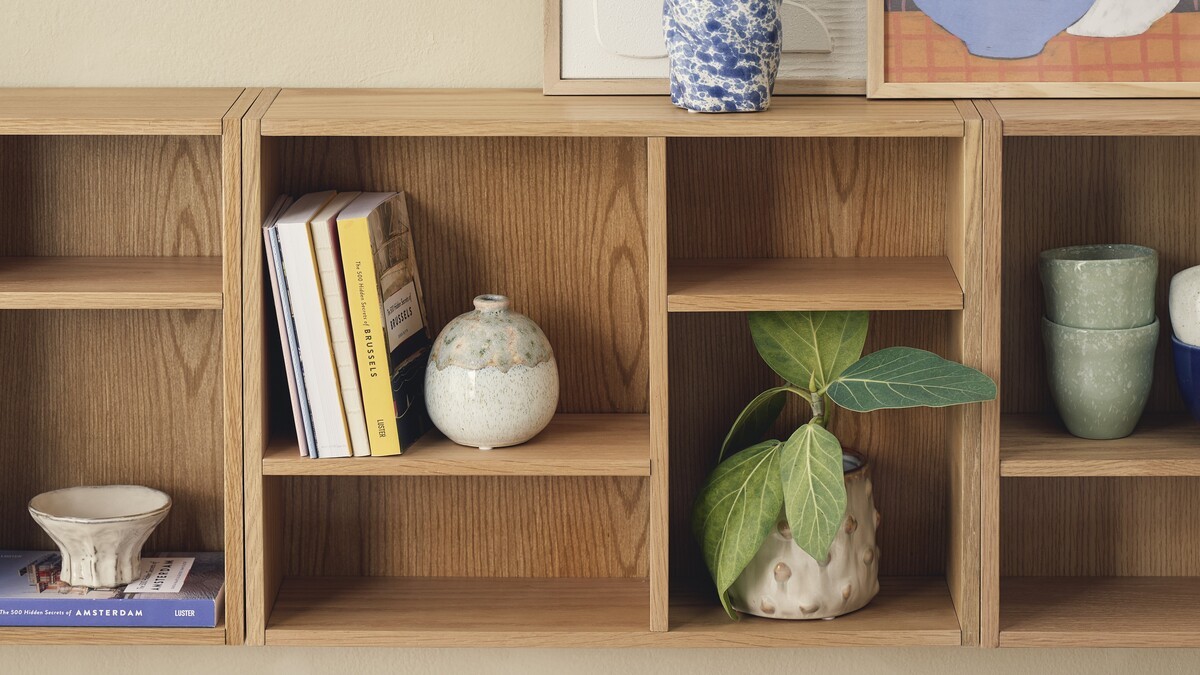
Works online and in-store: shelving unit from the new Søstrene Grene collection Credit: Søstrene Grene
Price is important, being loved matters more
It is true that, thanks to the ease of comparison, price plays a major role in online business. But those who sell solely via discounts lose both margin and brand value. The key to success is “loved value”: offering noticeably good value for money. This can be achieved with honest materials, clear guarantees and small special touches – a limited seasonal colour for the bestselling armchair, a starter set for a first home, an own-label range with transparent sustainability credentials. Drops instead of permanent sales create desirability, bundles increase basket sizes, and loyalty programmes build customer relationships without destroying the price structure.
The hard truth of the last mile
Furniture is bulky, fragile and expensive to transport – the last mile can ruin a business plan if it is romanticised. Those who opt for flat-pack designs, think in modular systems and simplify assembly reduce costs and complaints. Augmented reality previews, detailed photos, 30-second assembly videos and accurate dimensioned drawings help to reduce incorrect purchases – and therefore returns, which are less frequent in furniture than in fashion, but all the more costly. A clean returns process with collection, inspection and resale preserves margins – and prevents a lot of stress.

Adds a splash of colour to the living room: bold HORNSYLD side table Credit: JYSK
Omnichannel means: going where the customers are
Marketplaces generate reach, your own shop builds the brand. Both – orchestrated in the right way – are not mutually exclusive. And yes: the furniture store remains important. Many people still want to try out seating comfort, feel materials, speak to someone in person. Showrooms, click & collect services and local collection points combine personal advice with convenience. Industry events also play a key role here: trade fairs provide a market overview, personal contacts and market-ready innovations in a short space of time. Anyone who is in Cologne in January can see what the year might bring – and turn trendspotting into concrete orders.
What customers really want
The fundamentals have not changed – only expectations have. Furniture must be affordable, functional – and look good. “Furniture-to-go” for mobile phases of life; modular systems that grow with people’s needs; sofas with removable, washable covers; lightweight shelving that can be assembled without tools. Sustainability only really counts when it is credible: FSC certification instead of empty phrases, recycled materials instead of greenwashing. Design remains a must – even in the mid-range segment. Organic shapes, warm tones and matt finishes make products both practical for everyday use and photogenic.
The plan for 2026
Social commerce is best used where impulse purchases make sense. Larger purchases, on the other hand, tend to be made in furniture stores. D2C is a stage for brand and data. Marketplaces are the engine of reach. And bricks-and-mortar retail is the anchor of trust. To succeed across all three areas, investment is needed: in visualisation, packaging and service – and in products that factor in logistics from the outset. Quality and sustainability, in turn, must be communicated through verifiable stories. The rest is craftsmanship: clear assortments, clean processes, reliable partners. Then the online strategy will pay off.
Save the date: 20-23 January 2026 - imm cologne, Cologne
More information & exhibitor list:
www.imm-cologne.com
Subscribe to the newsletter and never miss a trend!

