


-

- Magazine
-
Articles
Cool Asia
Asia as an engine
Asia is not only the largest continent in the world, covering 44.6 million square kilometers, but also home to around 60% of the global population across 49 countries. These huge figures are just as impressive as the continent’s diversity—including its furniture industry. Despite differences in production cultures, material worlds, and supply chain logic, one thing is clear: Asia is on the rise, and European markets can benefit through partnerships.
A continent of many facets
Business requires understanding, as each country brings its own strengths. China remains the scaling machine. With its combination of deep production—from particleboard to high-gloss lacquer—and integrated hardware technology, it enables large, process-stable series. Vietnam specializes in flat-pack and RTA: technically clever, safely packaged, and ideal for e-commerce. At the same time, clusters for solid wood (e.g., acacia) and MDF are growing—a solid base for promotional items and outdoor ranges. India scores with mixed materials: wood-metal combinations, visible craftsmanship, and robust industrial looks paired with scalable production. This makes India attractive for hospitality projects and brand-defining small series with higher design shares. Malaysia and Indonesia bring material expertise. Rubberwood and teak shape the programs; established legality certifications (e.g., SVLK/FLEGT in Indonesia) strengthen compliance. The result: resilient raw material chains—a big plus in regulated EU markets.
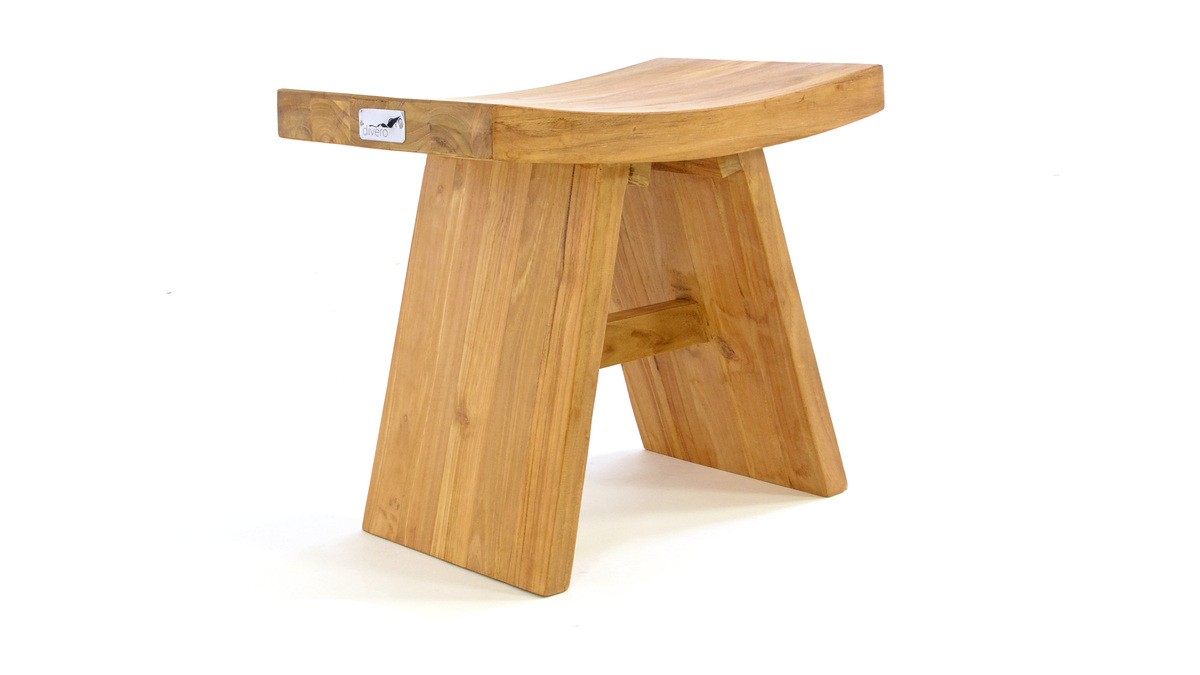
Asian-style stool made from Indonesian teak, certified EU-compliant with the SVLK seal. Credit: Poco
From Japandi to New Chinese Style
Asian furniture makers are not only excelling in production but also setting global style trends. Japandi, a blend of Japanese and Scandinavian simplicity, combines clean lines with warm woods and stands for calm, function, and naturalness—matte fronts in sand/greige, slim oak shelving, or stackable wooden stools. Biophilic design brings nature indoors with soft radii, tactile surfaces, and natural materials. Retail ideas include bamboo carts as mobile prep stations, acacia tables with soft edges, fabric-covered niche panels, or sideboards. Neo-Orientalism merges tradition and modernity: porcelain, lacquer, grooves, and brass details lend depth to calm forms without slipping into opulence—ideal for dining series with a fine story. The New Chinese Style (新中式 / Xinzhongshi) builds on Ming and Song influences—moon-gate motifs, delicate wooden frames, louvered screens—paired with contemporary reduction. Mortise-and-tenon aesthetics (screwless-looking joinery) often serve as design statements. “Tattooed furniture” adds emotion and individuality with laser-cut decorations, interchangeable panels, and stickers or inlays—making customization affordable. Perfect for studios and e-commerce where visible variation matters.
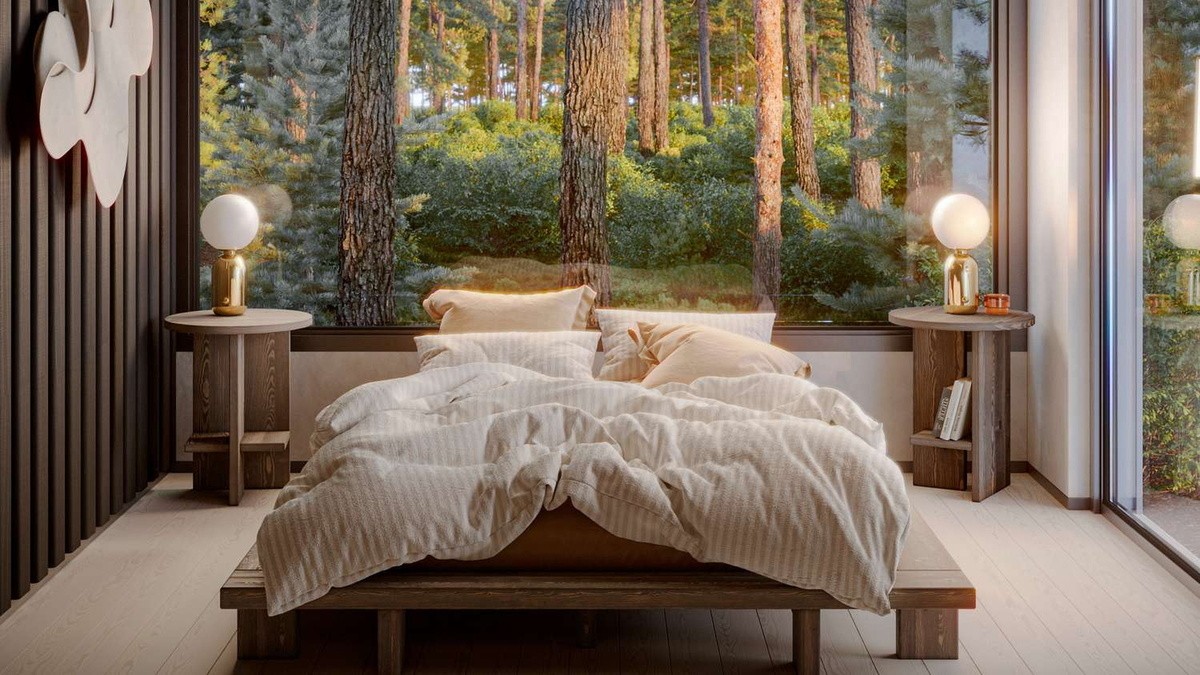
Japandi: the Japanese sleep classic, the futon, is experiencing a renaissance. Credit: OTTO
From trend to floor
These new Asian style worlds open a wide playing field for living, sleeping, outdoor, and home office. They translate into products that make everyday life easier—modular, repairable, parcel-ready. For retail, this means series that work as sets or single heroes; forms that bring calm to open layouts; materials with authentic sustainability stories. A slim New Chinese Style console (living room/hallway) adds a cultivated accent in the entrance and doubles as a light sideboard. RTA construction keeps it shippable; in dark ash or walnut veneer, it harmonizes with greige walls and stone textures. Rubberwood provides warm, robust tactility at an affordable price—for example, dining tables with soft radii, slightly splayed legs, and matte finishes, forming timeless centers for small and large rooms alike. Paired with stackable chairs, they create a consistent product world. Indonesian teak stands for longevity and natural elegance. Lounge chairs with wide armrests, visible grain, and upholstered panels fit indoors or on balconies; with SVLK certification, they come with a strong compliance story.
From sourcing advantage to market advantage
Wer den Sourcing-Mix gezielt nutzt, macht aus Kosteneffizienz Markenstärke. Asien steht dabei 2025+ nicht nur für günstige Fertigung, sondern bildet eine Entwicklungsplattform: RTA‑Exzellenz, Materialkompetenz und datenfähige Prozesse treffen auf europäische Markenführung, Service und Kundennähe. Wer beides verbindet—mit klarem Sourcing‑Mix, EU‑Finishing und „Regulatory by Design“—gewinnt Tempo, Resilienz und Marge. Und im Möbelumfeld wird aus dem Asia-Trend ein belastbares Geschäftsmodell. Den ersten Schritt können europäische Unternehmen in Köln machen: Auf der imm cologne 2026 haben sich bereits über 200 asiatische Möbelspezialisten angemeldet!
Save the date: 20-23 January 2026 - imm cologne, Cologne
More information & exhibitor list:
www.imm-cologne.com
Subscribe to the newsletter and never miss a trend!

